

Buying a classic car is exciting, but a polished exterior can only tell you so much. The real story often comes out once the engine is warm, the car is moving, and you can feel how it responds on the road.
At Auto Appraisal Group, we work with classic, antique, and collector vehicles every day. One thing experienced buyers understand is that older cars require a different kind of attention during a test drive than a modern daily driver. The systems are different, parts availability varies, and what is normal on a 1967 muscle car may be a serious warning sign on a 1985 European sports car. Knowing what you are listening and feeling for, and why, can make a significant difference in what you walk away with.
Jump To:
Before You Turn the Key
A proper test drive starts before you ever put the car in gear. Ask the seller to let the car sit cold before your visit. A warm engine can mask a hard-starting problem, carburetor flooding, oil pressure issues, or coolant concerns that only appear during a cold start. Once you arrive, watch and listen during the startup. Does it fire quickly or crank repeatedly? Does it smoke, stumble, or require the choke for an extended period? Does the idle settle cleanly once the engine comes up to temperature?
Classic cars with carbureted engines, mechanical fuel pumps, and points-based ignition systems behave differently than fuel-injected modern vehicles. A slight warm-up period is normal. Extended rough running, stumbling under initial acceleration, or an idle that never fully settles are worth noting.
Listen for Unusual Noises
Once the car is moving, turn off the radio and pay close attention. Older vehicles are naturally noisier than modern cars, but there is a meaningful difference between mechanical character and a car in need of repair.
Listen for:
- Metallic ticking or rattling from the engine bay, especially at idle or under acceleration
- Valvetrain noise that changes with RPM, which can point to low oil pressure, worn components, or deferred maintenance
- Clunking from the suspension or rear end when transitioning between acceleration and deceleration
- Grinding or whining from the transmission or differential
- Exhaust leaks, which often sound like a rhythmic ticking or popping near the engine
- Vibration through the floor, seat, or steering wheel that increases with speed
A vibration that worsens with vehicle speed typically points to tires, wheels, driveshaft balance, or alignment. A clunk on deceleration often suggests worn U-joints, a loose differential mount, or driveline slop. One isolated noise does not always mean you should walk away, but a pattern of noise and vibration across multiple systems warrants a closer look.
Steering Feel and Handling
A classic car does not need to feel like a modern performance vehicle, but it should feel predictable and consistent. Pay attention to how the steering responds at different speeds, how the car tracks in a straight line, and how it handles through turns.
Watch for:
- Wandering or the need for constant steering correction at highway speeds
- Excessive play in the steering wheel before the wheels respond. Some older recirculating ball systems have more play than modern rack-and-pinion setups, but there is a threshold beyond which it becomes a safety concern
- Pulling to one side under acceleration or braking, which can suggest alignment issues, suspension wear, or evidence of prior accident damage
- Steering that feels tight in one direction and loose in the other
- Unusual noises when turning at low speeds, such as clunking or grinding from the steering box or tie rod ends
- Significant body roll or a floating sensation at moderate speeds
Steering and suspension repairs on classic vehicles can range from simple adjustments to significant work depending on parts availability and the vehicle’s design. Either way, these findings should factor into your evaluation.
Braking Performance
Braking is one of the most important safety checks during any test drive, and it deserves careful attention on a classic. Start gently and work up to a moderate stop in a safe area. The car should stop in a controlled, consistent manner.
Watch for:
- A pedal that feels soft, spongy, or sinks progressively toward the floor under sustained pressure. This may indicate air in the lines, a failing master cylinder, or a wheel cylinder leak
- Pulling to one side during braking can point to a stuck caliper, uneven drum adjustment, or brake line restriction
- Pulsing through the pedal, which often suggests warped rotors or out-of-round drums
- Grinding or scraping sounds, indicating metal-on-metal contact
- Brake fade after repeated use at moderate speeds
- A burning smell after light braking
Many classic vehicles use drum brakes, manual (unassisted) brake systems, or early disc brake setups that feel different from modern vehicles. That difference in pedal feel is expected. What is not acceptable is a system that does not stop the car safely and consistently. Braking concerns should never be dismissed as a “quirk” of the era.
Transmission and Drivetrain
The transmission reveals a great deal during a drive. For automatic transmissions, common on American classics from the 1950s through the 1970s, shifts should occur at the appropriate RPM and feel reasonably smooth. Older Turbo-Hydramatic, Powerglide, and Ford C4/C6 units shift differently than a modern transmission, but they should not slam, flare, slip, or hesitate between gears.
For manual transmissions, pay attention to clutch engagement, synchronizer function through the gears, and how the car responds under load. Worn synchros are common on high-mileage vehicles and show up as grinding when shifting into second or third gear before the vehicle has fully slowed. A clutch that grabs very high in the pedal travel or chatters during engagement may be near the end of its service life.
Look for:
- Slipping under hard acceleration, where the RPMs climb faster than the vehicle’s speed would suggest
- Delayed engagement when selecting drive or reverse from park
- Hard or jerky shifts at normal driving speeds
- Popping out of gear under load or on deceleration, which is common in worn four-speed transmissions
- Transmission fluid that smells burned. If accessible, the dipstick can tell you a lot
- Evidence of fluid leaks under the vehicle after the drive
Transmission work on classic vehicles can be costly, and sourcing parts for less common units takes time. A transmission that misbehaves during the road test should factor directly into your offer.
Gauges and Cooling
Classic car gauges are functional instruments, not decoration. Keep an eye on them throughout the drive, particularly as the vehicle reaches operating temperature.
Monitor:
- Oil pressure: Should come up promptly on startup and remain steady at idle. Low or fluctuating oil pressure is a serious concern, especially in high-mileage engines.
- Coolant temperature: Should stabilize within the normal operating range and stay there. A gauge that keeps climbing in traffic may suggest a failing thermostat, low coolant, a weak water pump, or a compromised head gasket. The last of these is an expensive repair.
- Ammeter or voltmeter: Should show a charging condition once the engine is running. A discharge reading after accessories are turned on points to an alternator or generator issue.
- Fuel gauge: Confirm it responds correctly. Non-functioning sending units are common on older vehicles and can leave you stranded.
If the seller explains that a gauge “has always done that,” take note. Gauge behavior that is dismissed as normal may be electrical, mechanical, or an early indicator of a larger issue.
Electrical Systems and Accessories
Classic cars are largely mechanical, but electrical systems can be a significant source of repair expense, particularly on vehicles with aging wiring, modified circuits, or multiple previous owners. Before or after the drive, take a few minutes to check the systems that are easy to overlook.
Test:
- Headlights (high and low beam), brake lights, turn signals, and reverse lights
- Interior lighting and instrument illumination
- Horn
- Windshield wipers and washers
- Heater function
- Air conditioning, if equipped. Note whether it blows cold and whether the compressor cycles properly
- Defroster
- Power windows, locks, or seats if present
- Convertible top operation, if applicable
Aftermarket wiring, aging insulation, corroded grounds, and prior repairs can all contribute to electrical gremlins that are time-consuming to trace. If multiple systems are inoperative, that raises reasonable questions about how the vehicle was maintained and what else may have been deferred.
After the Drive
The inspection should not stop when the car is parked. Let the vehicle idle for a few minutes and take a walk around.
Look and listen for:
- Fresh fluid spots under the vehicle, including oil, coolant, transmission fluid, or fuel
- A burning oil smell, which can indicate leaks onto the exhaust
- Coolant smell, which may suggest a leak from the radiator, hoses, or a more serious internal source
- Exhaust smoke: blue smoke points to oil consumption, white smoke may indicate coolant entering the combustion chamber, and black smoke suggests a rich fuel condition
- Rough idle or hesitation after the engine is fully warm
- Difficulty restarting after a short stop. A hot start issue is common with older fuel systems and vapor lock
Some issues only appear once the vehicle has reached full operating temperature. That is why a cold start, a thorough drive across varied conditions, and a post-drive review are all part of a complete evaluation.
When You Cannot Test Drive the Car Yourself
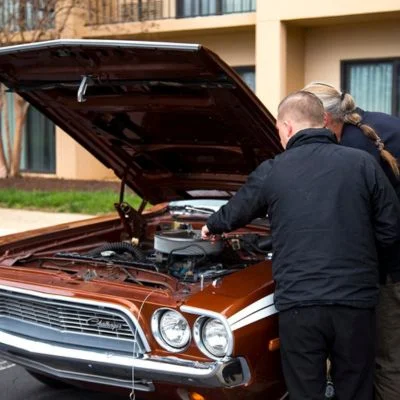
Many classic car purchases happen at a distance. You may find the right vehicle through an online auction, a private seller in another state, or an estate sale where logistics make an in-person visit impractical. In those situations, a Classic Car Pre-Purchase Inspection from Auto Appraisal Group can bridge the gap.
A professional inspection documents the vehicle’s visible condition, photographs key areas, identifies mechanical concerns, evaluates originality, and provides test drive observations when available. For buyers who cannot be there in person, it offers an objective foundation for making a decision rather than relying solely on the seller’s description or listing photos.
How Auto Appraisal Group Can Help
A test drive tells you how a car feels. It does not tell you everything about what it is. Hidden rust, body filler, incorrect components, undisclosed accident history, and title concerns are not always detectable from behind the wheel.
That is why serious buyers combine a thorough road test with an independent pre-purchase inspection. Auto Appraisal Group has specialized in classic, antique, and collector vehicles for over 30 years. Our Classic Car Pre-Purchase Inspections are built around the specific considerations that matter for these vehicles: condition accuracy, originality, and documentation. You will have what you need to buy with confidence, negotiate from a position of knowledge, or walk away.
If you are considering a purchase and want an independent review before you commit, contact Auto Appraisal Group to schedule a Classic Car Pre-Purchase Inspection.